
 English
 Spanish
 Arabic
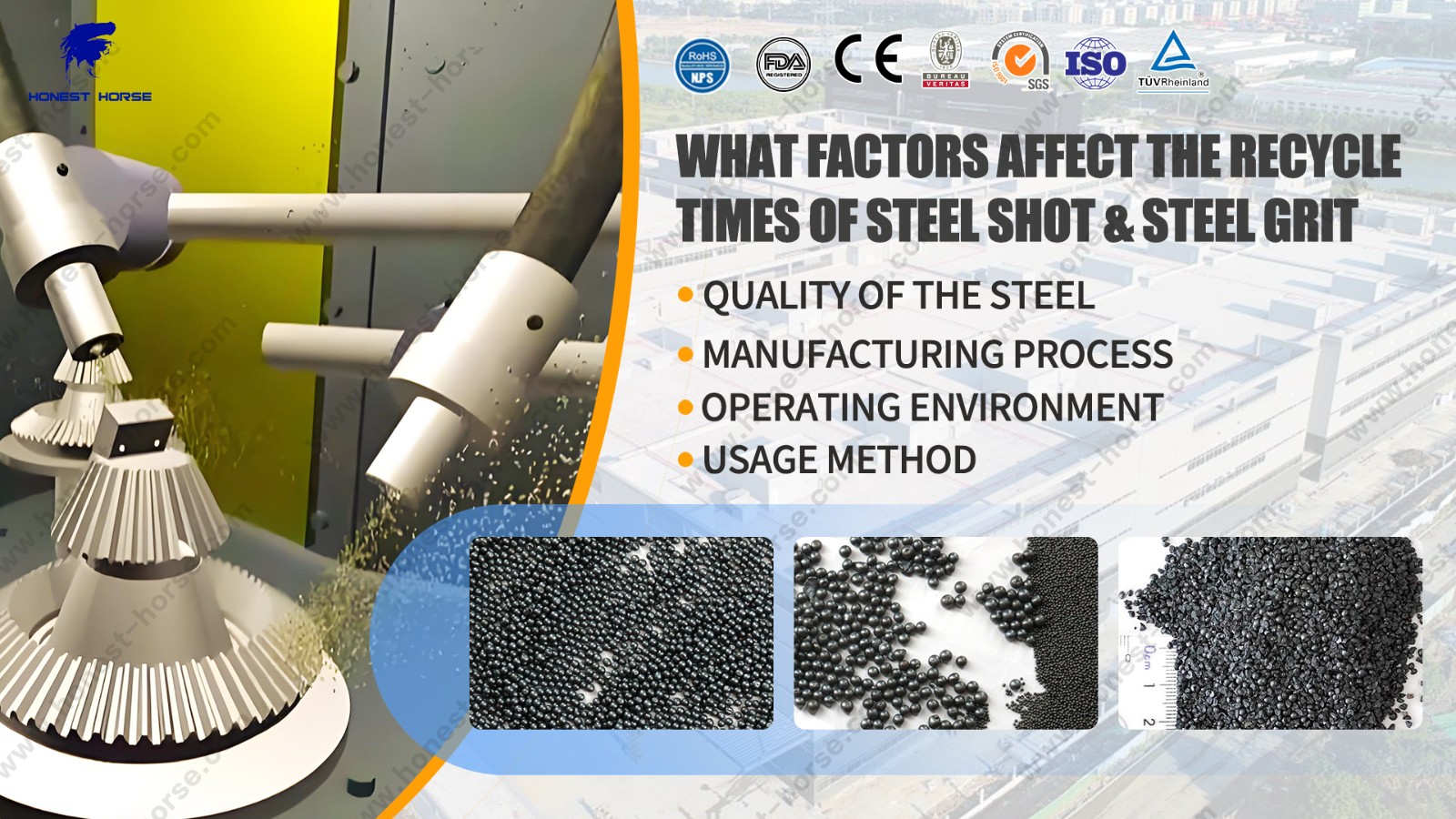
What factors affect the recycle times of steel shot & steel grit
Materials and Quality
Material: Different materials (cast steel, stainless steel, alloy steel) have different durability. Stainless steel is corrosion-resistant, while cast steel is cost-effective but easily damaged.
Hardness and Density: Steel shot with moderate hardness (too hard and it's brittle, too soft and it wears quickly) and high density has a longer lifespan, can withstand high impacts, and is less prone to breakage.
Internal Defects: Porosity, cracks, and shrinkage cavities significantly reduce lifespan.
Production Process
Heat Treatment: Good quenching and tempering processes are key to ensuring uniform hardness and wear resistance of the steel shot.
Forming Control: Ensure consistent dimensions and good sphericity to reduce the loss of irregular shot.
Operating Environment
Cleanliness: The cleanliness of the processing environment and the absence of impurities.
Humidity: Humid environments easily cause rust (especially in low-carbon steel), affecting its physical properties and lifespan.
Corrosivity: Chemical media accelerate corrosion; stainless steel shot has an advantage in this environment.
Operation and Use:
Hardness Matching: The hardness of the steel shot should match the hardness and surface roughness of the workpiece to be cleaned. Excessive hardness will accelerate its own wear.
Usage Frequency: Higher shot blasting/peening frequency naturally leads to faster wear.
Operating Techniques: Correct equipment parameters (air speed, blasting angle) can reduce abnormal wear.
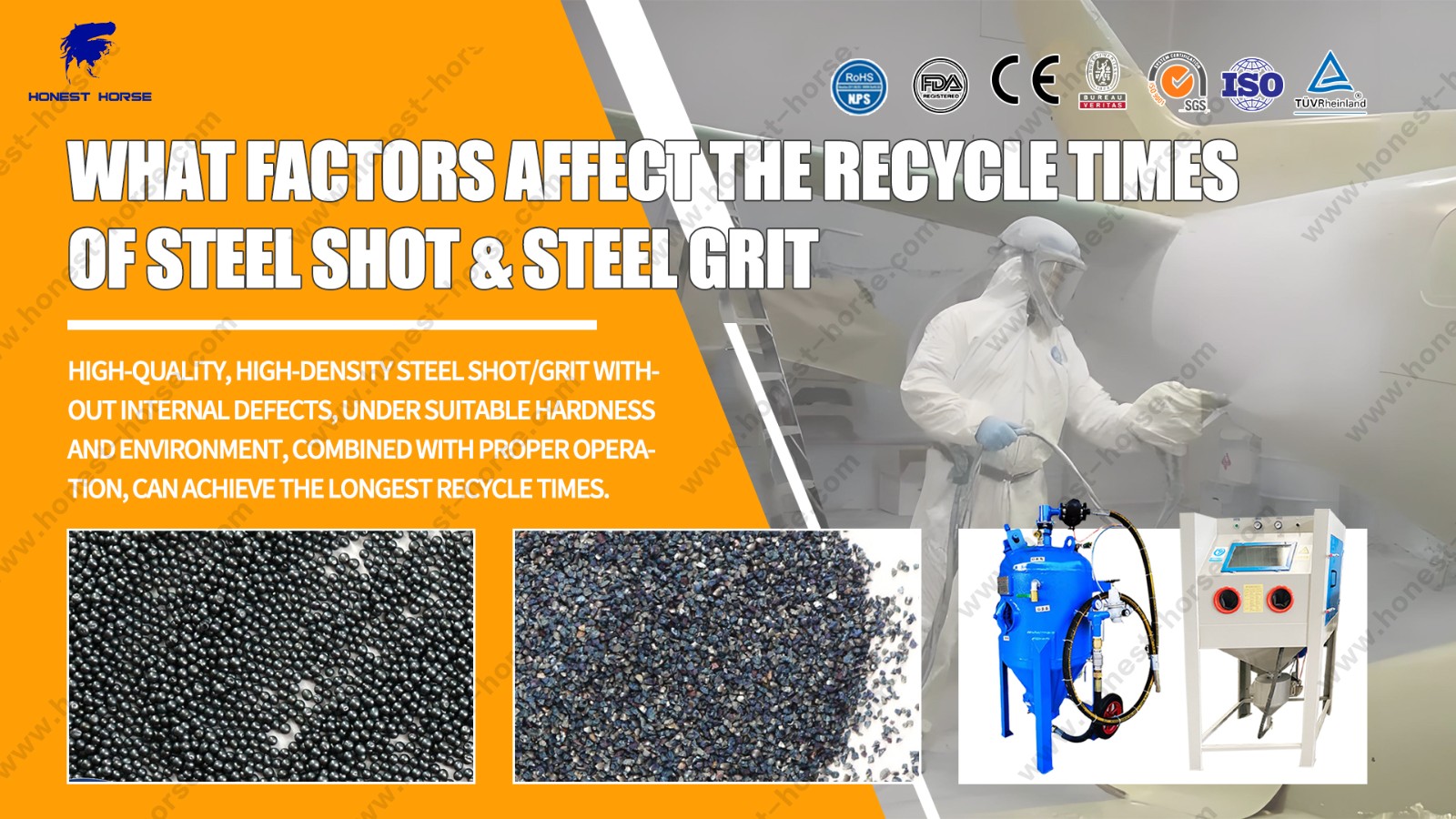
Summary: High-quality, high-density steel shot/grit without internal defects, under suitable hardness and environment, combined with proper operation, can achieve the longest recycle times.
2005-2022 © All Rights Reserved.HONEST HORSE (CHINA) HOLDING LIMITED