
 English
 Spanish
 Arabic
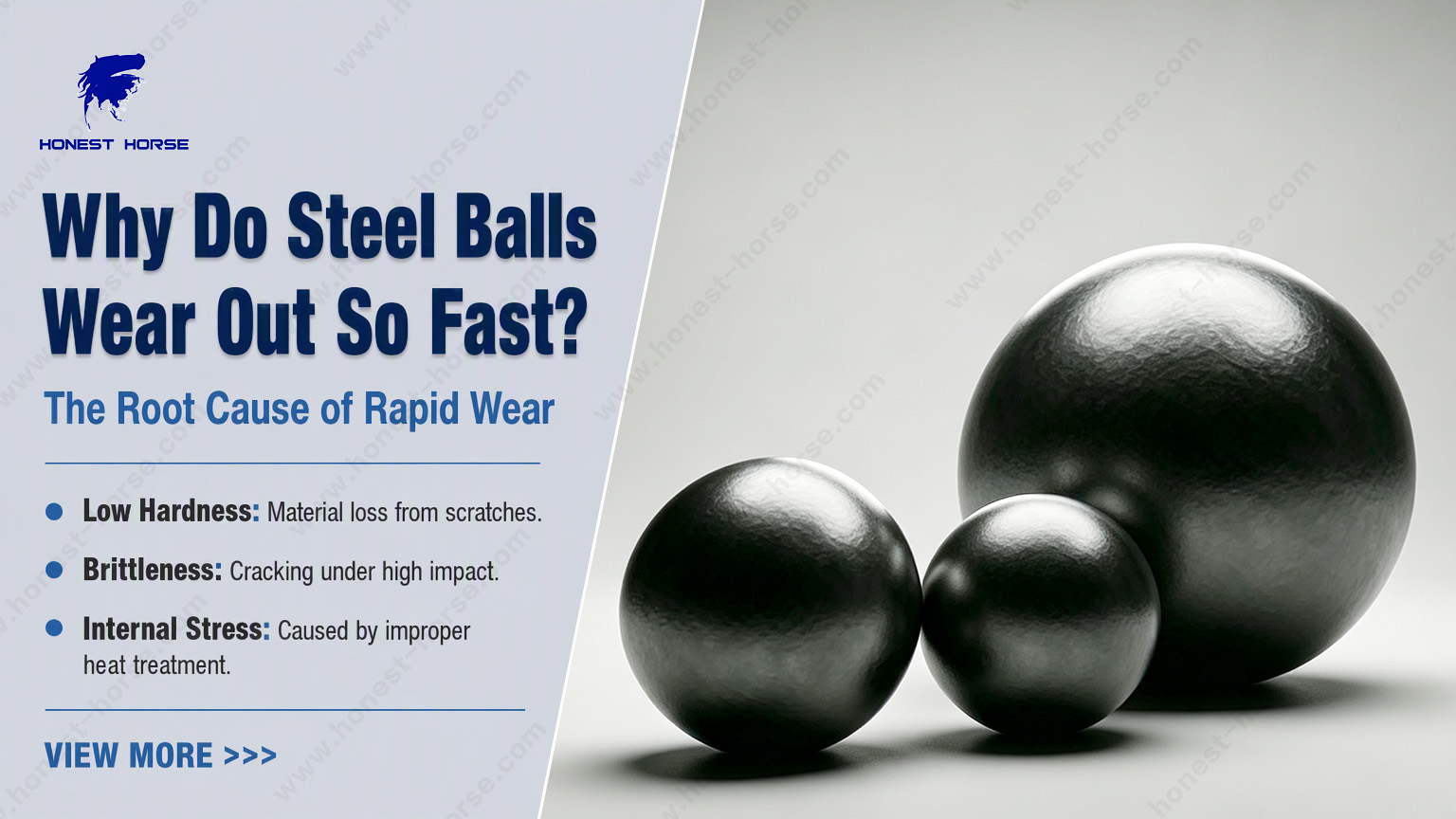
Why Do Steel Balls Wear Out So Fast
The Solution: Matching Hardness to Toughness
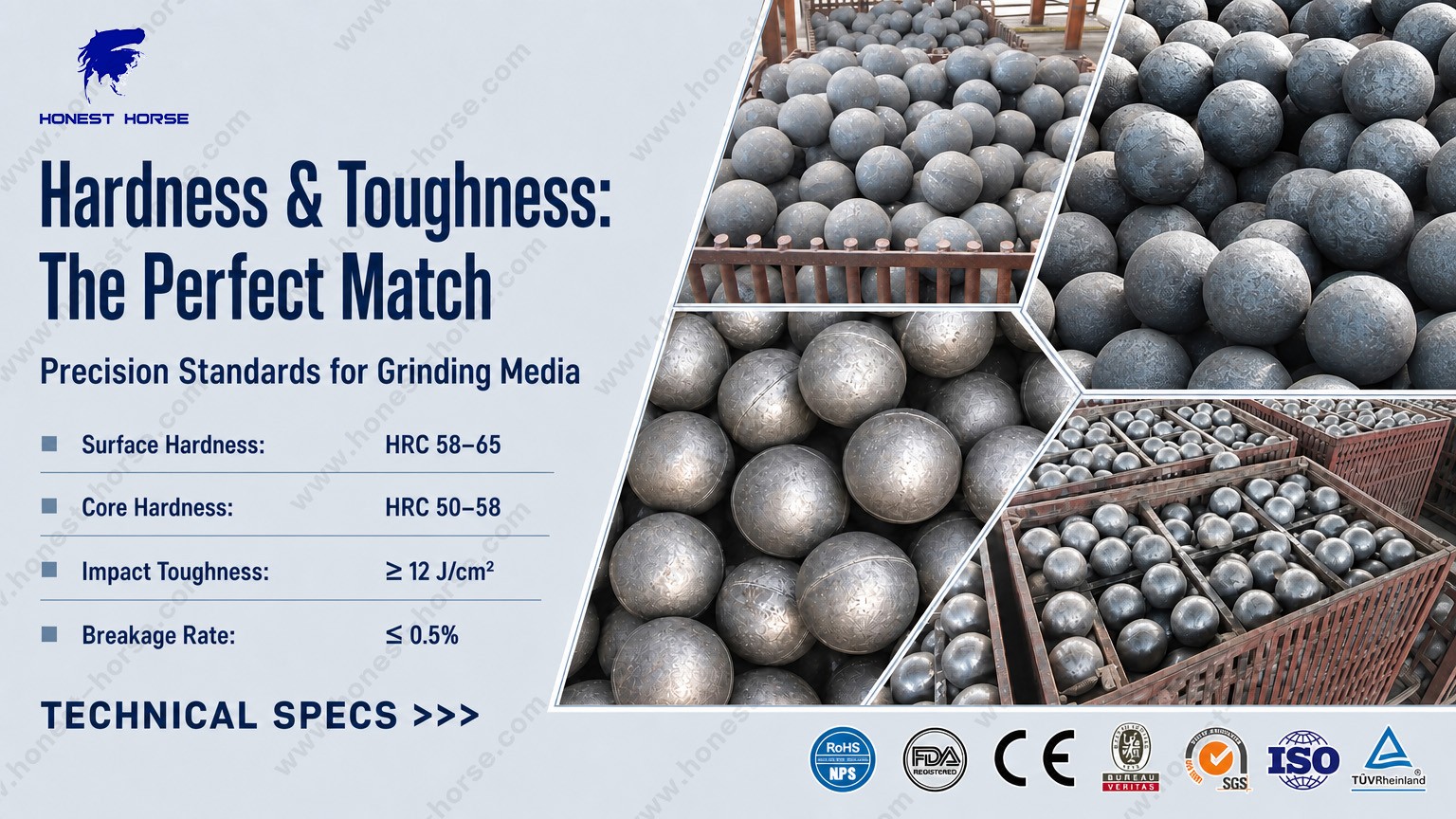
High-performance grinding balls are defined not by a single metric, but by the precise balance across the following profile:
Parameter | Target Range | Why It Matters |
Surface Hardness | HRC 58–65 | Resists abrasive scratching from ore particles |
Core Hardness | HRC 50–58 | Prevents brittle fracture on high-energy impact |
Impact Toughness | ≥ 12 J/cm² | Absorbs shock without crack initiation |
Breakage Rate | ≤ 0.5% | Minimizes contamination and downtime cost |
Key Process Controls
Alloy Composition — Cr / Mn / Mo Additions
Chromium, manganese, and molybdenum strengthen the martensitic matrix, raising both hardness and wear resistance without sacrificing ductility at the core.
Full-Body Quenching
Uniform through-hardening prevents a soft core from becoming the failure origin. Gradient hardness profiles — hard shell over soft interior — are a hidden driver of spalling and early breakage.
Low-Temperature Tempering
Controlled tempering relieves quenching-induced residual stress, restoring toughness while preserving the high-hardness microstructure achieved during quenching.
Real-World Performance Impact
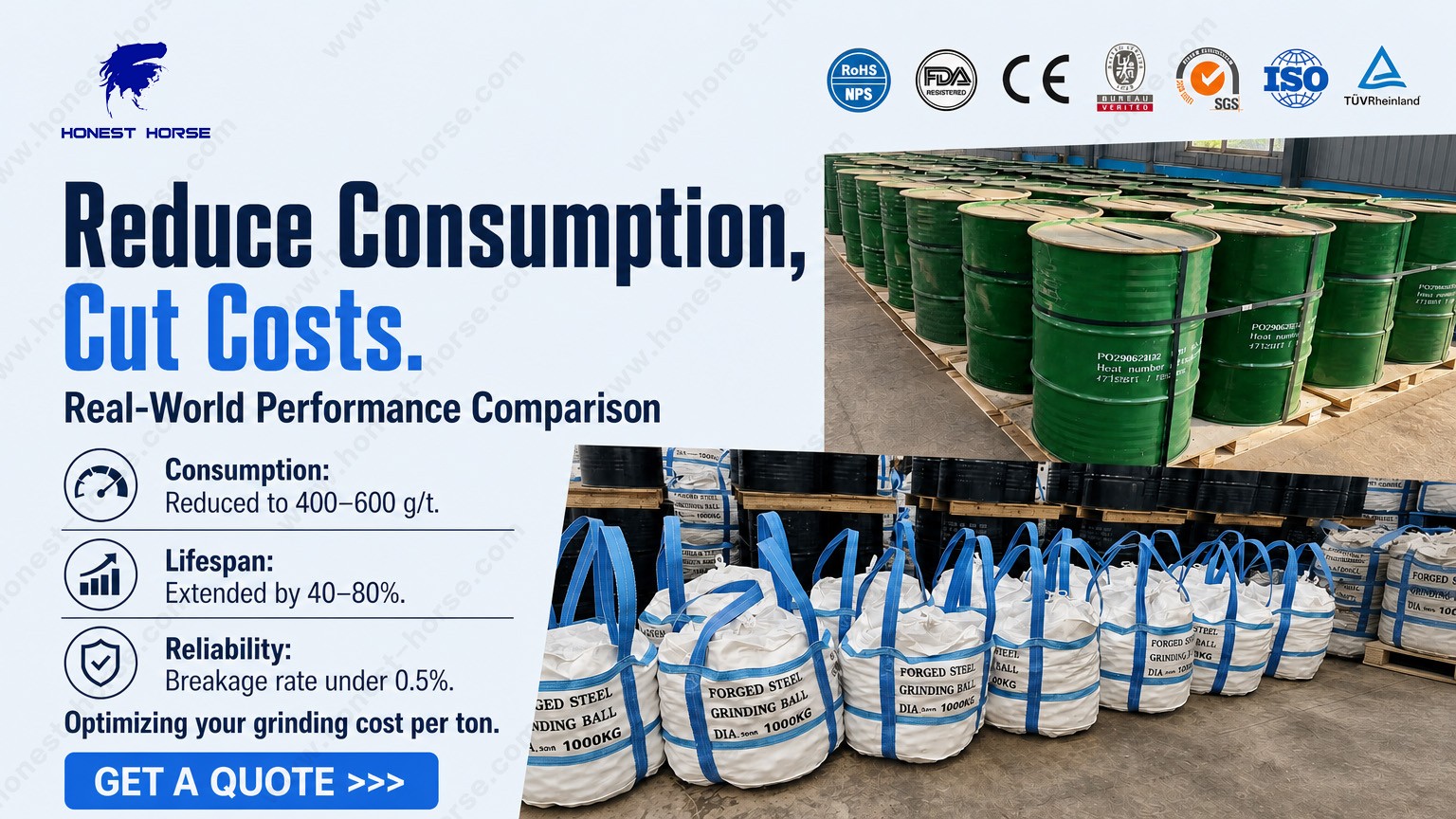
Compared to standard steel balls, optimized grinding balls deliver measurable improvements across all key operational metrics:
Metric | Standard Ball | Optimized Ball |
Ball Consumption (g/t ore) | 800–1,200 | 400–600 |
Breakage Rate | 1–3% | ≤ 0.5% |
Service Life Extension | — | +40–80% |
Lower consumption per ton directly reduces grinding cost per ton of ore processed.
Conclusion
Steel ball wear is not an unavoidable operating cost — it is a variable that materials science can control.
The formula is straightforward: right hardness, matched toughness, disciplined process. When all three align, wear rates drop, breakage becomes rare, and the cost-per-ton of grinding follows.
The question is not whether better grinding media pays off. It is whether your current supplier has actually engineered the balance — or just hit a hardness number on paper.
2005-2022 © All Rights Reserved.HONEST HORSE (CHINA) HOLDING LIMITED