
 English
 Spanish
 Arabic
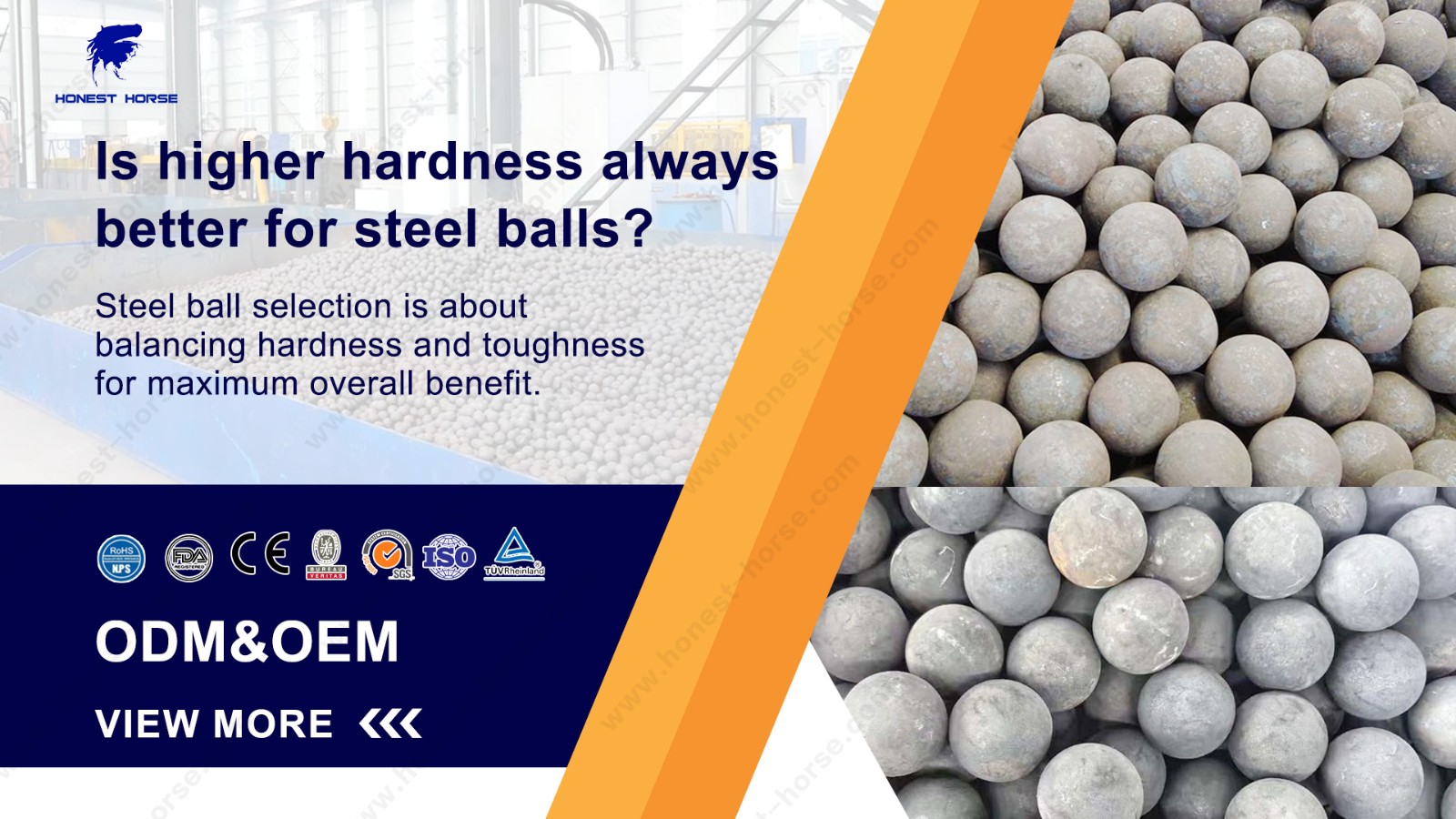
Is higher hardness always better for steel balls
II. Drawbacks Caused by Excessively High Hardness
(1) Reduced Toughness Leads to Cracks and Chipping
Hardness and toughness of steel balls follow a trade off relationship. As Brinell hardness value rises, the internal structural toughness of steel declines continuously. During ball mill operation, constant high impact collisions and compression occur between steel balls as well as between steel balls and liners. High hardness yet low toughness steel balls cannot withstand repeated impacts, resulting in surface peeling, chipping and fragmentation. Broken ball fragments mix with raw materials and lose grinding functions. It increases steel ball consumption and raises labor costs from frequent ball refilling.
(2) Accelerated Liner Wear and Higher Equipment Maintenance Costs
Over hard steel balls feature high rigidity.Their sharp impact abrades mill liners and shortens liner replacement cycles.Enterprises have to halt production for regular component replacement.Apart from extra purchasing expenses,production downtime causes output losses and raises comprehensive operating costs indirectly.
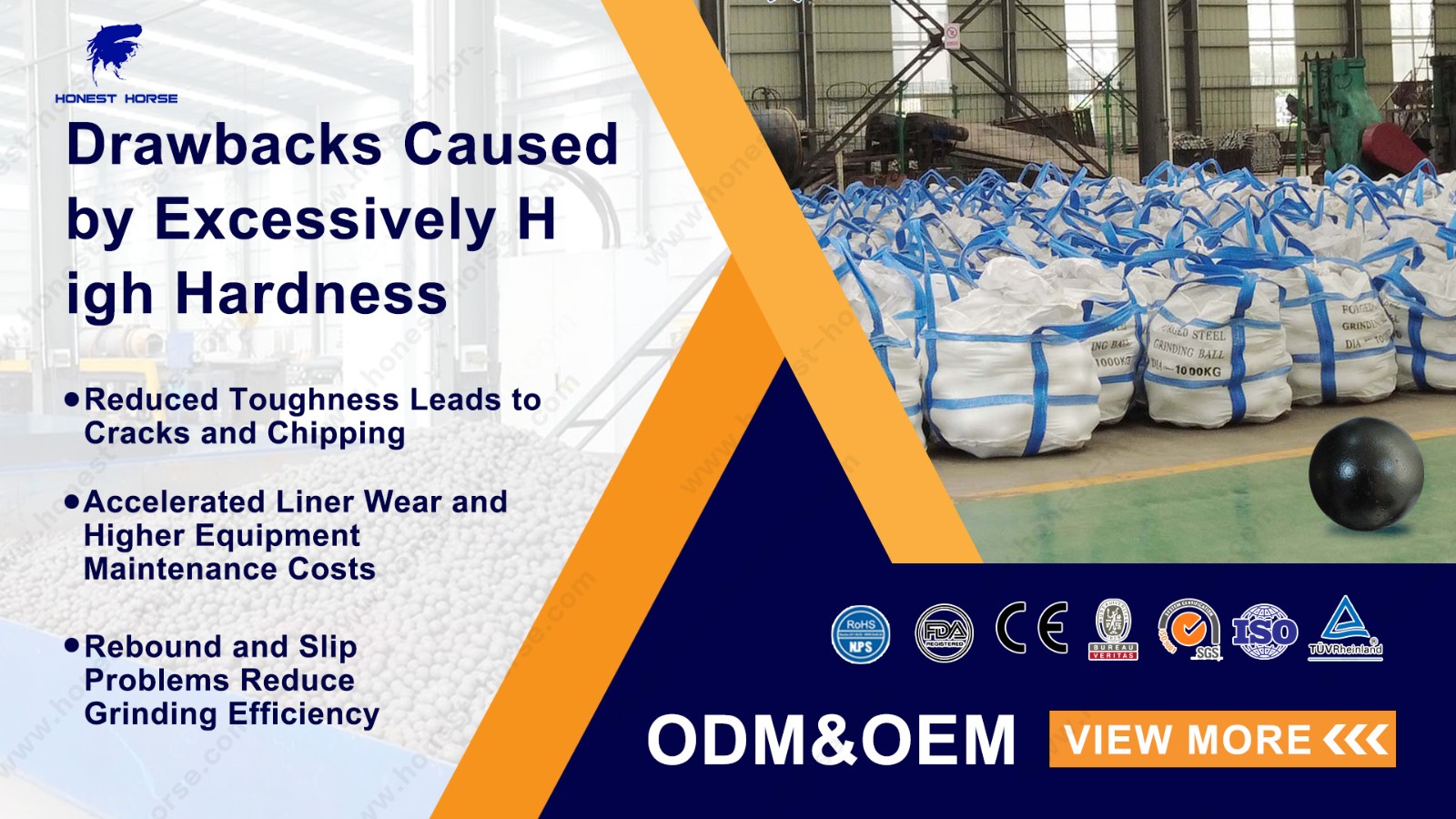
(3) Rebound and Slip Problems Reduce Grinding Efficiency
Over hard steel balls come with increased elasticity.They tend to rebound and slip when falling onto materials.Effective impact force gets wasted, weakening crushing performance. Inadequate grinding fails to meet required discharge particle size and drags down the productivity of the whole production line.
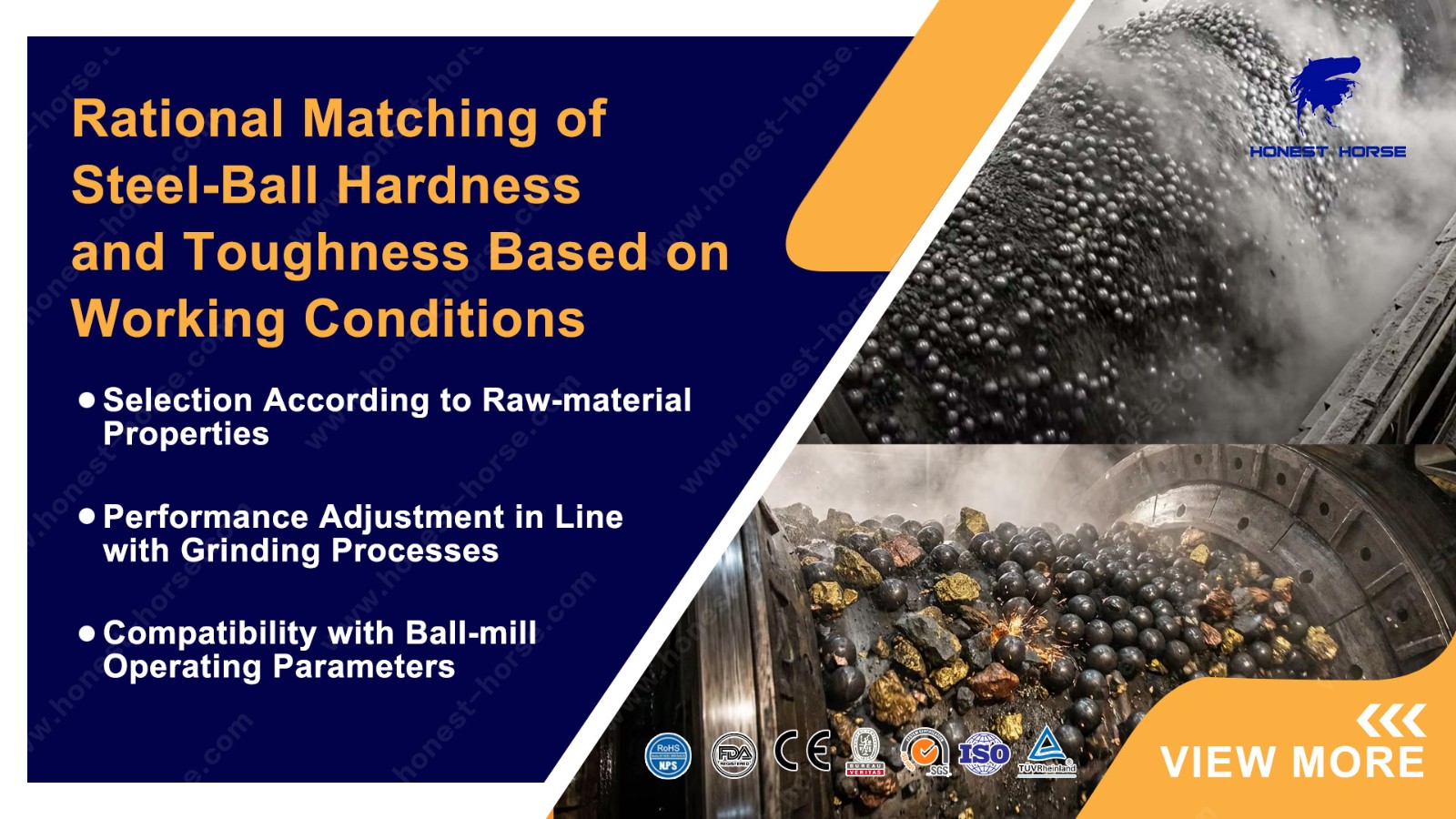
III. Rational Matching of Steel Ball Hardness and Toughness Based on Working Conditions
(1) Selection According to Raw material Properties
Material hardness is the top priority.Relatively high hardness steel balls are adopted for hard raw materials such as iron ore and granite to guarantee wear resistance.For soft substances including limestone and clay,priority should be given to higher toughness with lower hardness to prevent ball breakage under impact. Feed particle size should also be considered. Large sized raw materials generate heavy impact loads,which demand enhanced steel ball toughness.
(2) Performance Adjustment in Line with Grinding Processes
The coarse grinding stage relies on impact force to crush large size lumps with heavy load, so steel ball toughness should be prioritized to avoid breakage.The fine grinding stage depends on frictional abrasion,where higher hardness steel balls are preferred for superior wear resistance. Moreover, dry grinding and wet grinding environments make a difference. Moisture induced corrosion in wet grinding also requires anti corrosion performance of steel.
(3) Compatibility with Ball mill Operating Parameters
Mill rotating speed, cylinder dimension and ball loading capacity also influence steel ball selection. Higher rotating speed raises collision frequency and calls for better toughness.Large scale ball mills produce stronger impact from high falling height, where high hardness low toughness steel balls are prohibited.
IV. Conclusion
To sum up,hardness shall never be the sole benchmark for steel ball procurement. High quality grinding media require a proper balance between hardness and toughness. Purchasers should get rid of the hardness only mindset. Steel ball material and hardness configuration shall be customized in accordance with raw material hardness, grinding techniques and mill parameters. By minimizing broken balls, protecting mill accessories and lifting grinding output, enterprises can cut long term costs and improve production efficiency.
2005-2022 © All Rights Reserved.HONEST HORSE (CHINA) HOLDING LIMITED